
Corsola (Galar)
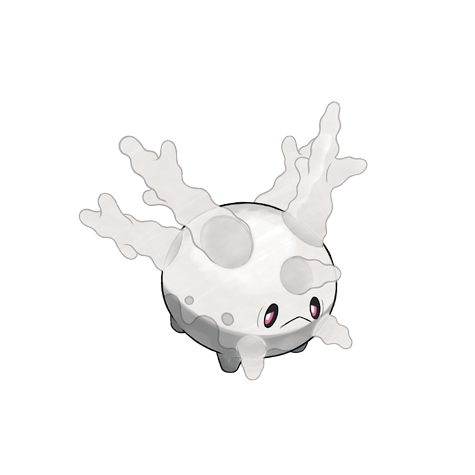
Corsola (Galar) is weak to Ghost, Dark and resists Poison, Bug and is immune to Normal, Fighting.
| Typing | Ghost |
|---|---|
| Abilities | Weak Armor, Cursed BodyHIDDEN |
| Height, weight | 0.6 m / 0.5 kg |
| Catch rate | 60 / 255 |
| Egg groups | Water1, Water3 |
Corsola (Galar) base stats
BST 410 · ranges at level 100| STAT | BASE | DISTRIBUTION | MIN LV 100 | MAX LV 100 |
|---|---|---|---|---|
| HP | 60 | 230 | 324 | |
| Atk | 55 | 103 | 229 | |
| Def | 100 | 184 | 328 | |
| SpA | 65 | 121 | 251 | |
| SpD | 100 | 184 | 328 | |
| Spe | 30 | 58 | 174 | |
| BST | 410 | series max 720 | ||
Corsola (Galar) weaknesses and resistances
damage taken · Ghost mono typingGhost, Dark
Poison, Bug
Normal, Fighting
Corsola (Galar) abilities
2 total · 1 hiddenRaises Speed and lowers Defense by one stage each upon being hit by a physical move.
Has a 30% chance of Disabling any move that hits the Pokémon.
Corsola (Galar) evolution line
2 stages #222Corsola

Best Corsola (Galar) moves
Sword Shield learnset · sorted by base powerCorsola (Galar) moves
69 moves availableCorsola (Galar) Pokédex entries(27 entries)
Clusters of Corsola congregate in warm seas where they serve as ideal hiding places for smaller Pokémon. When the water temperature falls, this Pokémon migrates to the southern seas.
Many live in the clean seas of the south. They apparently can’t live in polluted waters.
They prefer unpolluted southern seas. Their coral branches lose their color and deteriorate in dirty water.
The points on its head absorb nutrients from clean water. They cannot survive in polluted water.
Many live in the clean seas of the south. They apparently can’t live in polluted waters.
CORSOLA live in warm southern seas. If the sea becomes polluted, the beautiful coral stalks become discolored and crumble away in tatters.
In a south sea nation, the people live in communities that are built on groups of these POKéMON.
It continuously sheds and grows. The tip of its head is prized as a treasure for its beauty.
It continuously sheds and grows. The tip of its head is prized as a treasure because of its beauty.
It continuously sheds and grows. The tip of its head is prized as a treasure for its beauty.
Pursued by Mareanie for the branches on its head, this Pokémon will sometimes snap its own branches off as a diversion while it escapes.
Corsola’s branches glitter very beautifully in seven colors when they catch sunlight. If any branch breaks off, this Pokémon grows it back in just one night.
Many live in the clean seas of the south. They apparently can’t live in polluted waters.
Many live in the clean seas of the south. They apparently can’t live in polluted waters.
CORSOLA’s branches glitter very beautifully in seven colors when they catch sunlight. If any branch breaks off, this POKéMON grows it back in just one night.
Clusters of CORSOLA congregate in warm seas where they serve as ideal hiding places for smaller POKéMON. When the water temperature falls, this POKéMON migrates to the southern seas.
These Pokémon live in warm seas. In prehistoric times, many lived in the oceans around the Galar region as well.
In a south sea nation, the people live in communi ties that are built on groups of these POKéMON.
In a south-sea nation, the people live in communities that are built on groups of these Pokémon.
Coral branches grow from its head. They break off quite easily, but they grow back in about three days.
It will regrow any branches that break off its head. People keep particularly beautiful Corsola branches as charms to promote safe childbirth.
In Alola, where their natural enemies Mareanie are plentiful, many Corsola have stubby branches on their heads.
The pink of Corsola that live in Alola is deep and vibrant, thanks to seas filled with nutrition.
Many live in the clean seas of the south. They apparently can’t live in polluted waters.
They prefer unpolluted southern seas. Their coral branches lose their color and deteriorate in dirty water.
It continuously sheds and grows. The tip of its head is prized as a treasure because of its beauty.
They prefer unpolluted southern seas. Their coral branches lose their color and deteriorate in dirty water.